


Watch my latest documentary above
“You will never, ever know what a lovely country this was,” wrote a veteran of the Second World War in 2006.
Writing to a journalist, Geoffrey Prater recalled how his brother was killed by a parachute mine while fire-watching in Stratford in October 1940; how he himself served in North Africa and Italy with the Royal Tank Regiment; and how, in late 1944, his mother wrote to tell him that a V1 had destroyed their home and everything in it.
Six decades later, he looked back on what they had sacrificed. “I am not going to comment on our country today,” he wrote, declaring his love for Queen and country. His letter ended simply: “Was it all worth it? No.”
Prater was not alone. Last November, 100-year-old Royal Navy veteran Alec Penstone told ITV’s Good Morning Britain: “I can see in my mind’s eye those rows and rows of white stones.” He recalled his friends who had given their lives fighting for Britain. “For what? The country of today? No, I’m sorry. The sacrifice wasn’t worth the result that it is now.”
Penstone, who died in May, seemed to bewilder ITV host Kate Garraway, who patronisingly offered an “Oh, I’m sorry” in the tone one might use to console a child who had lost a game of football.
Garraway’s co-host Adil Ray was downright rude, abruptly demanding: “What do you mean by that though?”
To answer that question, I have produced a documentary featuring the generation who remember Britain before mass immigration, exploring how the country has transformed within a single lifetime.
It was Nicholas Pringle’s book, The Unknown Warriors, which featured Prater’s letter among hundreds of others, that spurred me to make this project. Pringle put out a request to Second World War veterans in regional newspapers across the country (and parts of the Commonwealth) asking for letters describing their wartime experiences and, crucially, how they viewed contemporary Britain. Here are some of their responses:
“Being an Englishman it is galling to feel that I and thousands of dead and living service personnel feel badly let down whilst this country is pandering to the so called refugees and immigrants who take advantage of benefits,”
“We feel that we are foreigners in our towns and cities. It is no longer a ‘country fit for heroes’. I am afraid Mr Churchill (and Nelson) would turn in his grave. We feel all our war efforts were for nothing.”
“It is now 18 years since I lost [my husband who fought the Japanese] and as I look around parts of Birmingham today you would never know you were in England. He would have hated it. I go nowhere after dark, I don’t even answer my doorbell then.”
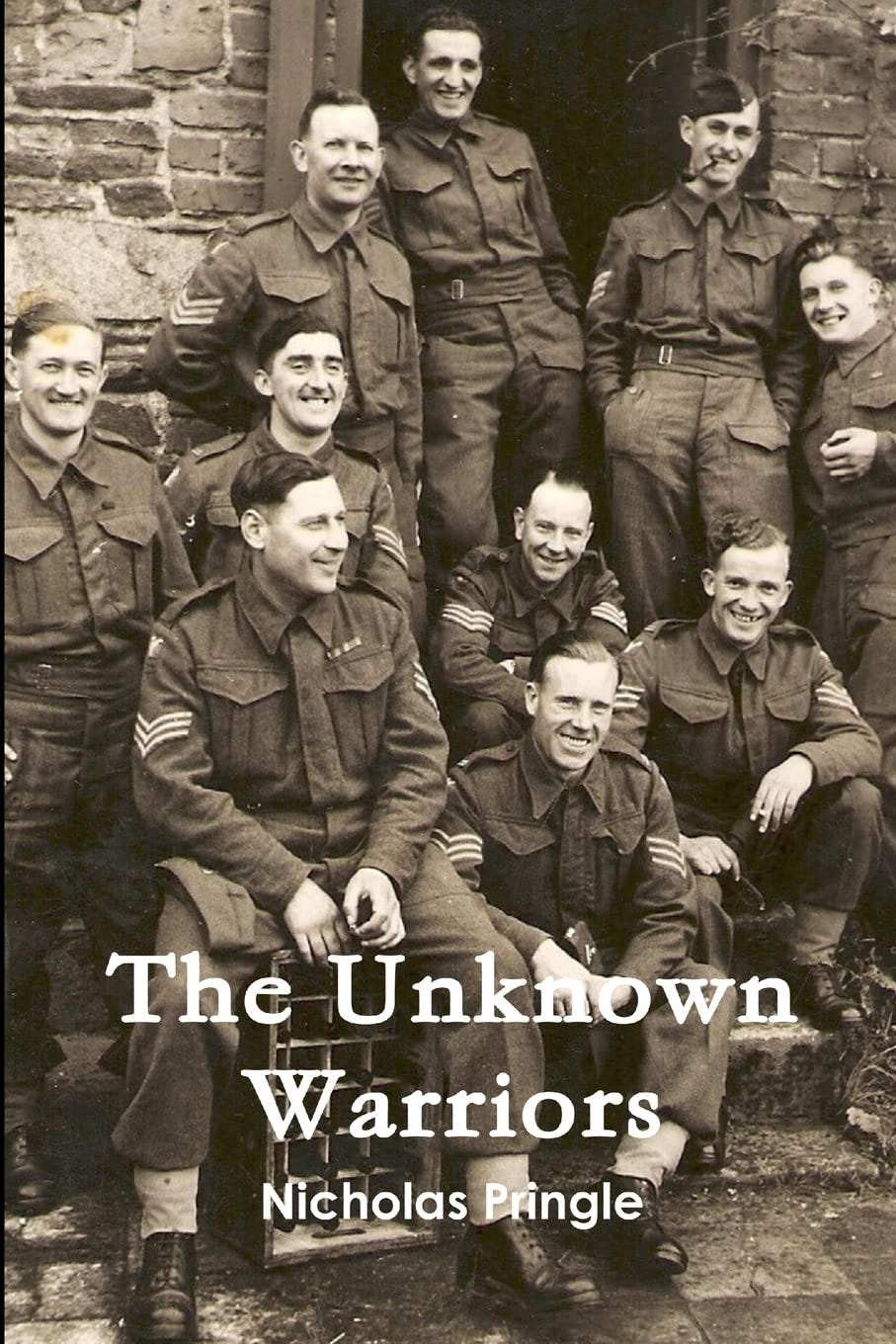
“You ask, “What do I think of my country at present?” My answer is that, I don’t think I have a country to call mine anymore. My father was a soldier in the First World War. I, myself, a soldier in the Second World War. In both instances the reason we were told was to defend our freedom and way of life against the forces of evil. In the meantime, the evil we fought against and lost so many good young men to maintain our so called FREEDOM has been betrayed by our political leaders who have allowed, what used to be my country, to be invaded by millions of immigrants,”
“Sheffield sounds like a foreign country i.e. no one speaks English. My feeling is that men who offered their lives have been betrayed and the dead gave their lives in vain.”
“I fought for a green and pleasant land, and freedom. I gave the war everything except my life. Would I do it again, the answer is NO! My free speech is gone. They tell me I live in a multi-culture society, I do not remember voting for this,”
“I was a corporal in the Royal Military Police, wounded and taken POW 29th May 1940. When Stukas dive bombed us my L/Cpl was killed… What rogues M.P’s are. Like many others we are fed up with the way we have been let down. If you are ethnic or an immigrant you are looked after, but being 100% British it is hard luck.”
For my film, I struggled to find veterans of the 39-45 war still alive today. These letters were written twenty years ago; one can only wonder what their authors would make of the country now.
I did manage to interview one Second World War veteran, although it did not end well. His daughter sat in as I asked him about his childhood, his wartime service and, finally, what he thought of Britain today, particularly immigration.
He told me he was unhappy with the state of the nation and opposed immigration. However, a few hours after my cameraman and I left his home, his daughter called to say they were withdrawing permission to publish the interview because of my questions on the subject.
Before the interview, she had told me that Alec Penstone’s family had received a significant backlash following his comments on ITV. I suspect the fear of a similar reaction prompted her call.
Out of respect for her father, I agreed not to air the interview.
The experience struck me as particularly ironic. So many of the veterans’ letters I had read in The Unknown Warriors complained that Britain was no longer a country where people could speak freely, especially about immigration. Twenty years later, I had interviewed a veteran who felt much the same way, only for his words never to be heard.
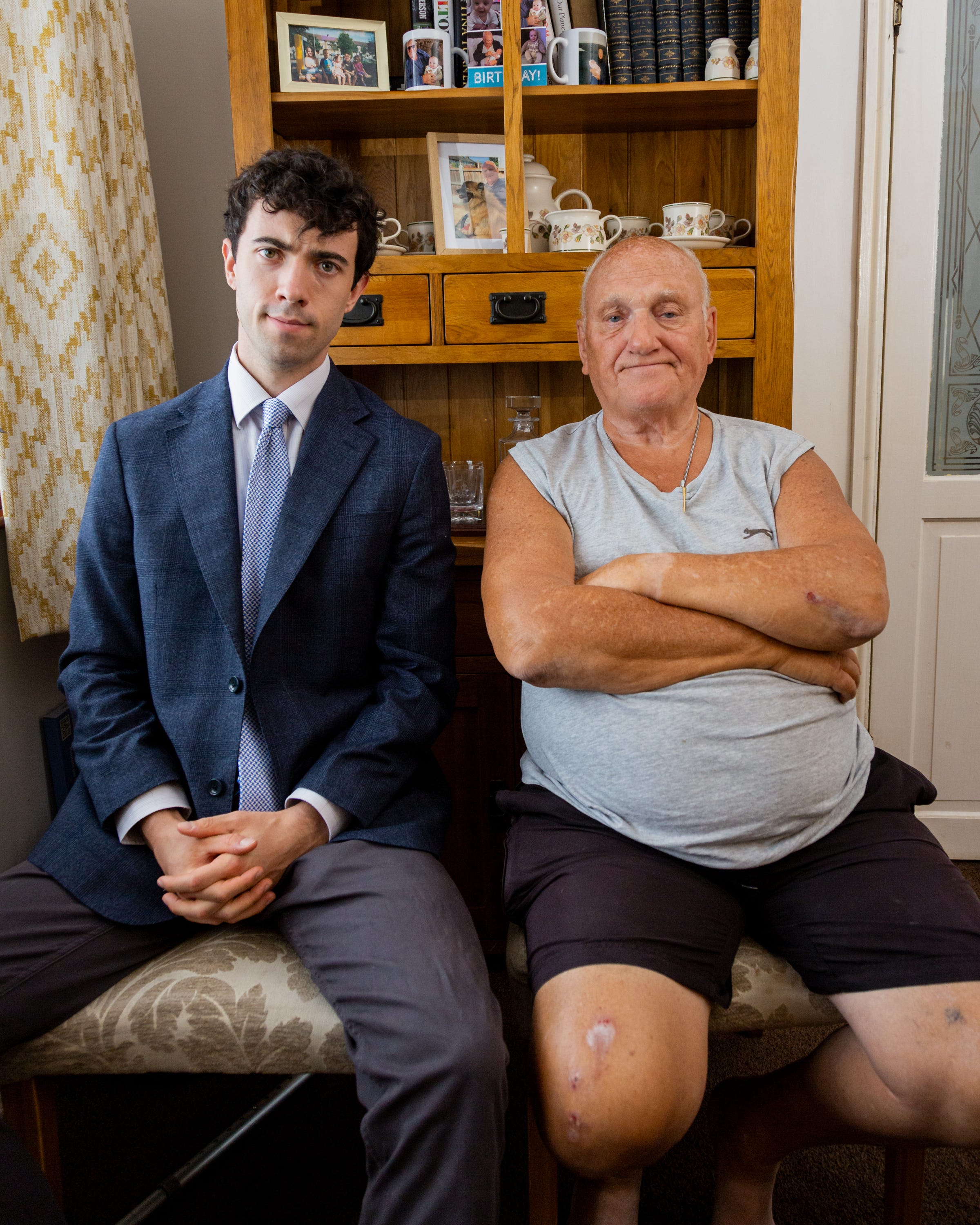
In the documentary, I interviewed two men in their nineties, two in their eighties, one in his seventies and one in his sixties. Britain’s transformation has happened so quickly, I could have interviewed people even younger and learned of a different country. The homogeneous nation whose population stayed largely the same over the last thousand years, and even beyond that, is now just 74 per cent white British, a number which is rapidly declining.
In 1968, Enoch Powell predicted that Britain would have between five and seven million Commonwealth immigrants and their descendants by the year 2000. His warning caused a political earthquake.
William Rees-Mogg, father of Jacob, penned an editorial in The Times entitled “An Evil Speech”, declaring: “This is the first time that a serious British politician has appealed to racial hatred in this direct way in our postwar history.”
Nearly six decades later, the younger Rees-Mogg described the English as a “mongrel people” and argued that Englishness should not be defined by ancestry.
I personally like Jacob, and have argued with him about Enoch Powell and demographic change before. But I will say again: he is wrong. The English exist as an ethnos, and we are fast approaching minority status in our own country. Some demographic projections suggest this could happen by the 2050s, others by the early 2060s - well within my lifetime.
Powell’s warning, however inflammatory, was prophetic. Had figures such as William Rees-Mogg and the Conservative establishment he represented taken it seriously, Britain might have followed a very different course.
Instead, successive Labour and Conservative governments pursued policies that fundamentally changed the character of the nation, without securing a democratic mandate for such a transformation. It is a betrayal that may yet bring about the destruction of both parties.
Labour minister Jenny Riddell-Carpenter recently dismissed a traditional vision of Britain, complete with warm ale, a black Labrador and a country pub, as a “very far-right nostalgic vision” that “never really existed”. It has existed, and still exists, but one day she may yet be proved right about its disappearance, as the country becomes increasingly unrecognisable from the England remembered by the older generations I interviewed.
When Major General Julian Thompson was born in 1934, the British Empire still covered roughly a quarter of the world’s land surface and ruled over hundreds of millions of people. Britain was one of the world’s great powers, and its population was overwhelmingly white British. There was no debate as to what it meant to be English, for England was entirely homogeneous.
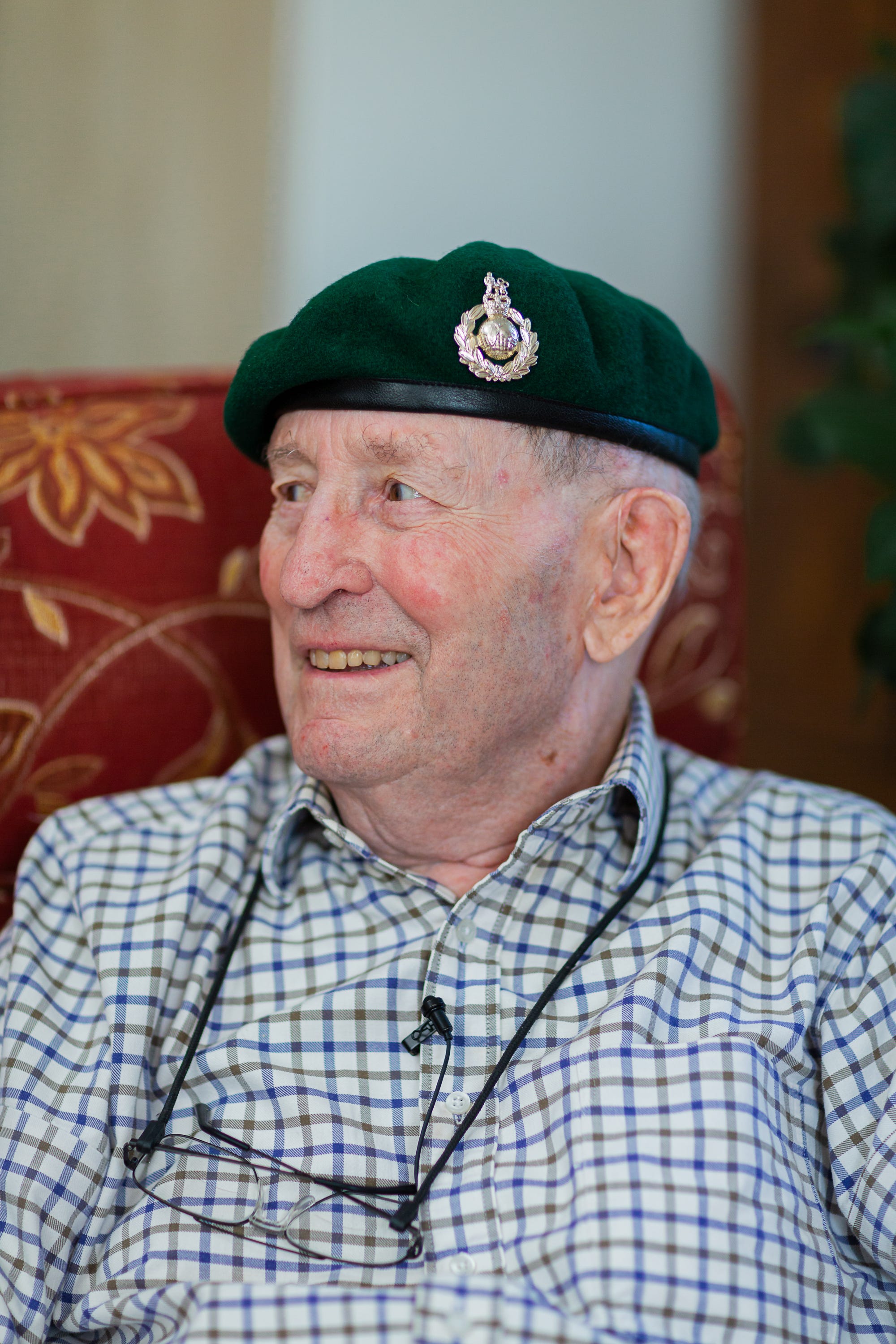
Thompson’s father, who fought on the Western Front during the First World War, moved to British India in the 1920s to join an architecture firm. Julian grew up in the Raj, attending schools in Darjeeling and Kashmir, and remembers his childhood as fun.
“I didn’t want to come home,” he told me. In any case, the war kept him in India, as the threat of German U-boats made the voyage back to Britain too dangerous. Thompson told me that, as a boy, he could never have imagined that four million people from India and Pakistan would move to Britain during his lifetime. “Never occurred to me,” he said. Asked how his younger self would have reacted, he replied: “Disbelief.”
Thousands of miles away, in the streets of north London, another boy was growing up in a very different part of the same Empire.
Ronald Clark, now 92, was raised in Tottenham during the 1930s. He too described his childhood as fun. “You played in the road. We played hockey, knocking down ginger and all those silly little things that kids do.”
Tottenham was also unmistakably English. “There was only one person in the neighbourhood that I knew was foreign, and he was an Italian,” Ron told me.
But the Tottenham of Ron’s childhood would not last.
After the war, Ron became a joiner, fitting out the interiors of pubs across East London. It was here that he began to notice newcomers settling in the capital.
Asked how he reacted to immigration in the 1960s, Ron replied: “Move out.”
He recalled an Indian family moving into a house down his road. “Within six months,” he said, other Indian families had begun buying houses along the street.
In December 1967, Ron left London with his family for Norfolk. “I wanted a better area for the children,” he told me.
Today, just 23.2 per cent of Tottenham’s population is white British, according to the 2021 census. I decided to take Ron back to Tottenham for the first time in more than half a century.
Like Ron, I had little idea what we would encounter. I could hardly have asked Hollywood to create a more extraordinary scene of modern “YooKay”. Every shop was foreign; Nearly everyone on the streets where Ron had sold newspapers in the 1940s, watched bombs fall and heard doodlebugs overhead, was of a migrant background. When we approached people, many couldn’t speak English.
I took Ron to Brunswick Road, where he grew up. His childhood home had been demolished and replaced with a car park covered in litter. There, we caught up with an elderly woman with a strong Jamaican accent. “I don’t come out at night,” she told us, explaining that people gathered nearby to take drugs.
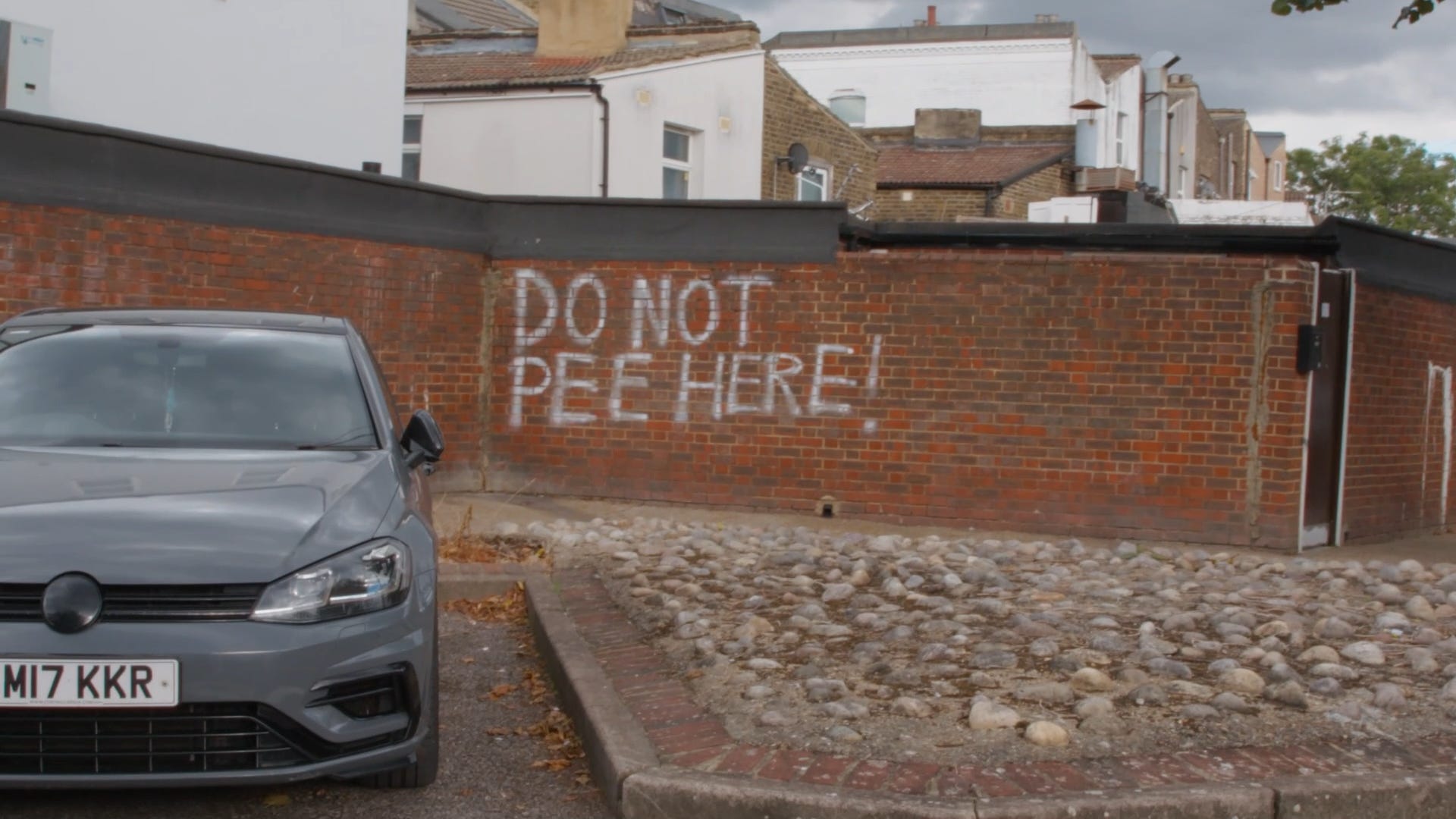
Nearby, large graffiti on a wall warned residents: “DO NOT PEE HERE.”
“It’s not English anymore. Not Great Britain anymore. There’s no great about it at all. It’s just a foreign country,” Ron said. Off camera, he told me I had given him nightmares for the rest of his life.
But perhaps his saddest reflection concerned his late wife, whom he had met at a dance in Tottenham more than seventy years earlier. Asked what she would have made of the place where they had fallen in love, Ron replied: “She would have burst into tears and rushed out as quick as she could go. She would have hated it.”

And that brings me back to Alec Penstone.
I suspect ITV presenter Adil Ray knew exactly what Penstone meant, but found it offensive that a Second World War veteran should look upon the multicultural Britain he champions with such despair. Ray’s own parents came from Pakistan and Kenya, part of the great waves of post-war immigration that transformed the country, and whose consequences veterans like Penstone have come to lament.
My documentary concludes with David Starkey, who rightly pointed out that I tend to be rather despairing about Britain’s future. But he insisted that I shouldn’t be. Unlike the fall of the Roman Empire, he argued, Britain’s demographic transformation was not the result of vast populations sweeping across its frontiers, but of laws passed by its own politicians.
“These are not forces of nature,” he told me. “These are the result of deliberate decisions that we took.”
And those decisions, Starkey argued, can still be reversed.
“We still, whilst we are an electoral majority, have the chance to reverse them. But it needs to be done politically and by consent.”
The documentary was produced by me in association with the Mass Deportation Coalition.