


The American worker now faces a three-pronged attack. First, DEI policies discriminate against white employees in hiring and promotions. Second, corporations import cheap foreign labour through programs like H-1B visa. Third, when Americans cannot be replaced at home, their jobs are simply shipped abroad to countries like India.
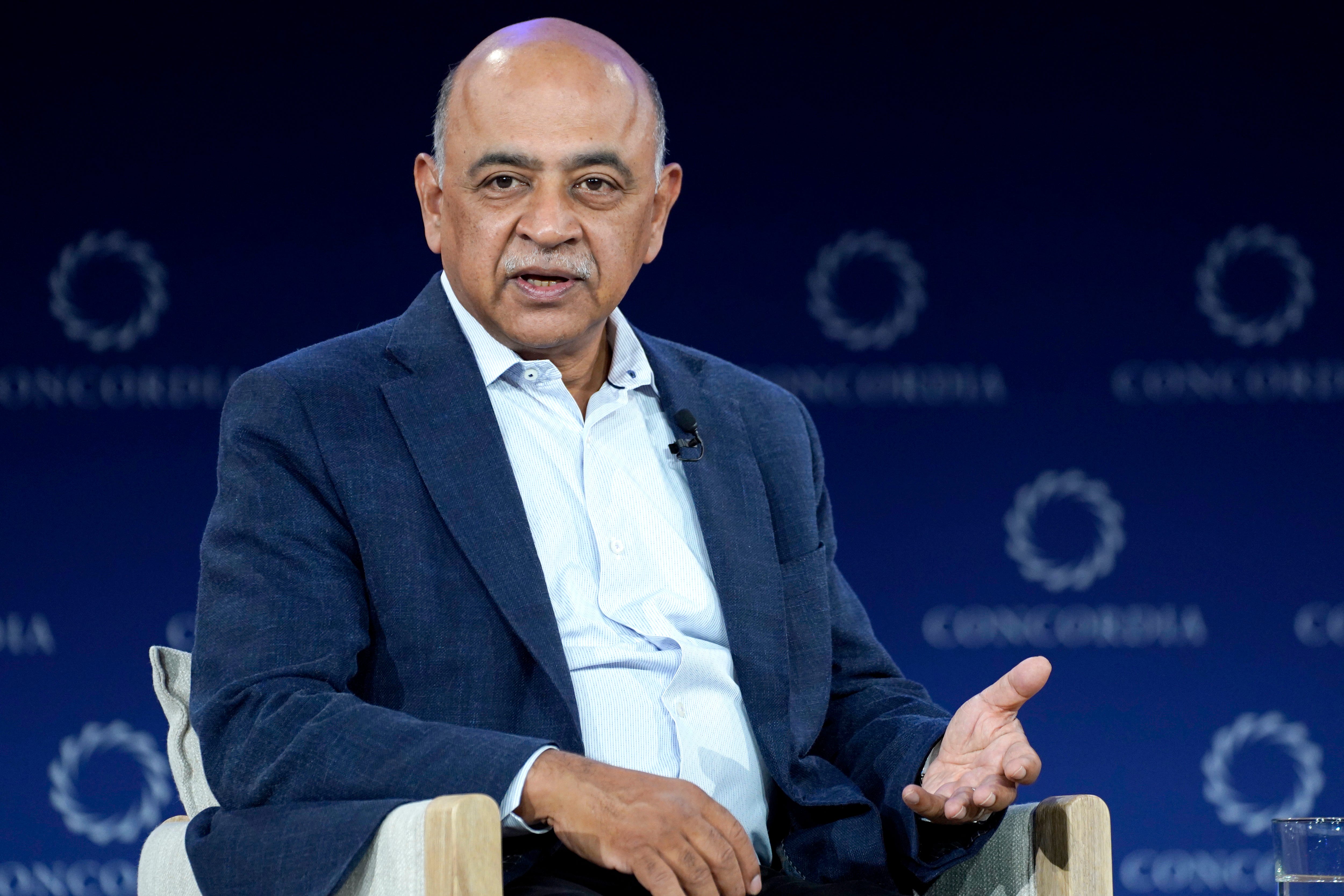
Few companies embody all three trends more clearly than IBM. The tech giant recently agreed to pay $17 million to settle allegations from the U.S. government that it discriminated against employees on the basis of race and sex. Federal authorities alleged the company tied bonuses and hiring decisions to demographic targets and restricted certain opportunities on the basis of identity. At the same time, IBM has relied heavily on imported labour, receiving 32,725 H-1B visa approvals over the past decade according to USCIS data. And increasingly, the company’s future appears rooted outside the United States altogether: under Indian-born CEO Arvind Krishna, IBM now employs roughly a third of its 280,000 workers in India, a figure that may rival, or even surpass, its American headcount.
If IBM represents the model, then the direction of travel is clear: less reliance on American workers, more dependence on imported labour and overseas workforces, and a growing corporate intoxication with India as both an economic and cultural destination.
“You can see that the world is moving into the Indian era,” declared Salesforce CEO Marc Benioff at the end of 2024. Since then the company has doubled its headcount in India to more than 14,000.
It was not an offhand remark. Nearly three decades earlier, as a young executive, Benioff travelled to southern India in a trip he would later describe as transformative.
In an interview with the Mail on Sunday, he recalled arriving in a remote village in Kerala, “like a scene from a movie… everybody dressed in white and orange, incense wafting through the air.” There, he met a guru who, he says, changed his life. “In your quest to change the world, don’t forget to do something for somebody else,” she told him.
For many workers, the blossoming of the Indian era marks the end of America’s.
One such worker is Jane (not her real name), a FedEx employee whose job was recently offshored to India. “There were several managers in my department, and one of them, who we thought was visiting family in India, was actually training our replacements,” she said.
As layoffs sweep through the US tech sector and corporate America, some of the country’s biggest companies are simultaneously expanding in India.
FedEx announced a $300m investment in an air cargo hub in Navi Mumbai in February; The company’s CEO, Raj Subramaniam, even flew out to the site of the new facility for a photo op.
At around the same time, Jane’s entire team’s jobs were sent to India. “I was really mad,” she said, adding that there was little she could do.

Some employees noticed a change in the company when Subramaniam, who was born and raised in India, took over from FedEx’s legendary founder Fred Smith in 2022. “Little by little things started getting worse, they put in place a program to reduce costs,” said Jane, who had worked at FedEx for almost two decades.
“When it was created back in the 1970s by Frederick Smith, it was a rags-to-riches story. People loved working there and worked there for decades. It was wonderful. You could call 1-800-Go-FedEx, and customer service was in America,” she recalled. In recent years FedEx has outsourced much of its IT operations and customer service functions to India.
Behind the growing corporate enthusiasm for India lies a straightforward economic reality: labour there is vastly cheaper than in the United States.
The median 2025 salary for engineering & data roles in the United States is $150,000; for the same roles in India workers are paid a median $22,000, according to a report by Deel and Carta, a payroll and compliance platform and equity management firm.
At a conference in San Francisco in September last year, Google CEO Sundar Pichai told the Indiaophile Salesforce CEO Marc Benioff that he “called the Prime Minister of India on Sunday night” to announce some important news.
Pichai recalled how, as a child, he “used to take this train through the south of India” in a town called Visakhapatnam. The audience at the conference cheered upon hearing the town’s name.
He went on: “We announced our largest ever AI investment outside the US, a $15 billion, one gigawatt plus data centre, 80% powered by clean energy with subsea cables going in.”
“The chance to transform a region like that with that kind of investment, it really meant a lot to be able to call the prime minister, who really cares about developing the country.”
Benioff commented that it “sounded like there’s a lot of folks here from India” and asked the audience to “stand up if you’re from India”. Dozens rose from their seats applauding.
Since 2020, Google and Salesforce alone have accounted for nearly 50,000 H-1B visa approvals.
To critics of Silicon Valley’s growing ties to India, the exchange was revealing.
“Here you have two tech CEOs, who have gotten rich by hiring foreign workers at cut-rate wages, bragging about how they are giving back to India. What about everything they have taken away from the United States by ignoring American labour?” comments Matthew O’Brien, Deputy Executive Director of the Federation for American Immigration Reform (FAIR).
Yet for many executives and professionals, India’s appeal extends beyond lower labour costs alone.
Silicon Valley-based immigration lawyer Navdeep Meamber says “there’s a lot of these tech industries in the States actually looking at India and moving jobs to India because of the attractions there.” She said salaries can be comparable to those in the US, and in India “you have domestic help, you have a driver, you have cooks, you have chefs. Life is much better than here. Here you’re doing everything yourself.”
Stephen Vivien, an engineer and former Google contractor based in the Valley, says Google asked him to train employees in the Philippines to take over the work of his team. “It felt humiliating in a way, to think that Google cared so little about your investment as a worker on their product, that they would just throw it to any group that they thought might be able to do it.” He said training his replacements felt “mean” and “harsh”.
Vivien said he worked closely with foreign tech workers at Google who came in on the H-1B visa program: “There were a lot of H-1B workers. Guys that had come from India, maybe some guys from other countries in Asia, they would create their own little network, their own little clique.”
Was there really a shortage of American workers? “Absolutely not”, Vivien said. “The Bay area is full of smart, American born, American educated, folks. And I kept looking around, I was like, “where are the guys and gals from San Jose State University, or Cal Poly [California Polytechnic State University]?””

In recent years there have been mass layoffs at major tech firms, blamed largely on improvements in AI. Companies have faced criticism for firing Americans while offshoring jobs, or relying on imported foreign workers.
So far in 2026 more than 142,000 workers have been impacted by layoffs in tech firms across America according to tracking platform TrueUp.
Deepika Singh, an immigration attorney, believes that in many cases, there simply aren’t enough capable Americans available to fill roles. “In general Indians come with a little more,” she said.
Singh, who moved to America from India more than twenty years ago, stressed that attitudes towards education are more vigorous in India than in the United States. “The education system is very robust in India,” she added. “Indians are born that way, we adapt ourselves to quick learning, we can pick up things easily.”
She argued that this can translate into an advantage in hiring. “When an H-1B is being filed, [Indians] do have an edge over some other applicants.”
The debate over H-1B visas has also drawn attention to the OPT [Optional Practical Training] programme, which allows foreign graduates to remain and work in the United States after completing their studies.
Kevin Lynn, Executive Director of the Institute for Sound Public Policy, described the OPT work authorisation program for foreign students as creating “competition for that bottom rung of the ladder, that first job out of college”. Under the OPT scheme foreign graduates are authorised to work for up to a year (and up to three if they are a STEM worker), and employers are exempted from paying FICA taxes. Under these conditions, foreign graduates can be much cheaper to hire than Americans. 294,253 students are in the US on the OPT program as of 2025; roughly half of them are from India.
The “Indian era” celebrated by Silicon Valley executives is not simply about economics. It reflects a deeper shift in the loyalties and identity of corporate America itself. The old model of the American corporation, rooted in national success, domestic workers, and long-term loyalty, is steadily disappearing. In its place is a global managerial class with little attachment to the West, and in some cases explicit loyalty to their home countries, such as India.
For the American worker, the fear is not merely losing a job. It is becoming a stranger in his own economy.
Very good article
Lenin predicted that Capitalism would suck in labour from across the World and America would be the prime example.