


“England expects that every man will do his duty,” signalled Lord Nelson on the morning of his greatest battle, perhaps the greatest battle, and the day of his death.
In 1843, some forty years after that glorious victory, Nelson’s Column was completed, standing 169 feet above his fellow Englishmen, looking towards Parliament.
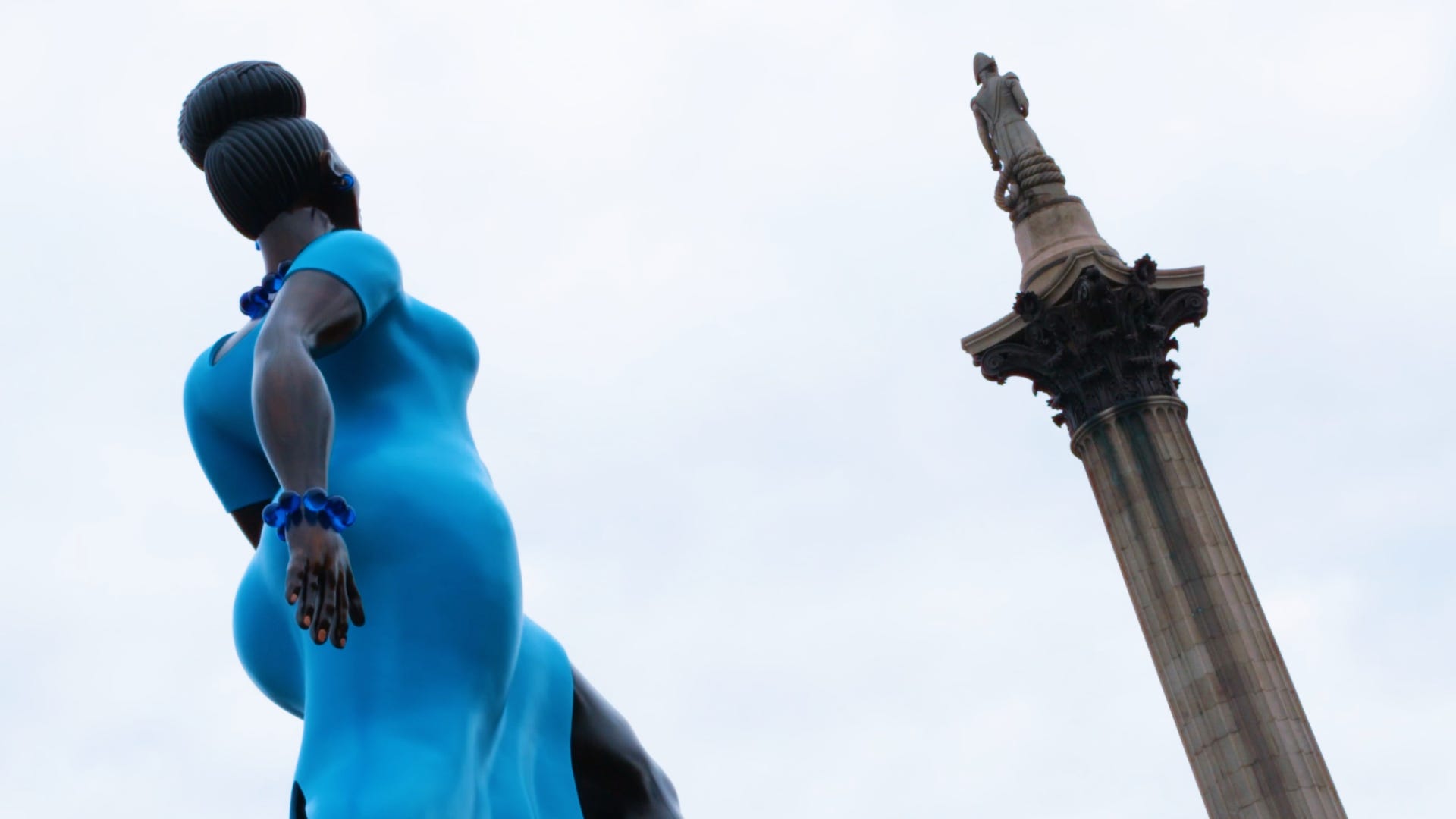
This week, Nelson was joined by Lady in Blue, a new statue of a large black lady in a neon-blue dress striding forward, meant to represent “everywoman” in contemporary Britain.
The statue is, of course, hideously modern and vulgar. It is a political symbol, proudly chosen by Sadiq Khan’s Fourth Plinth Commissioning Group, meant to push their ugly vision of multiculturalism.
Lady in Blue, a bright, tacky figure, contrasts with the Square’s other figures, carved in stone and bronze: Nelson, George IV, Sir Henry Havelock and Sir Charles James Napier. That is the whole point. For Sadiq Khan and his commission, these white men represent everything wrong with Britain: colonialism, a lack of ethnic or gender diversity, and pride in the nation and its conquests.
The people who chose Lady in Blue are explicit in this goal.
Ekow Eshun, chairman of the group that selected Lady in Blue, has himself described the Britain of his childhood as “essentially a racist country” and argued that, despite discovering his ancestor was a white slave trader, he and “all black people” remain victims of the legacy of slavery.
When another Fourth Plinth sculpture, Antelope, was unveiled in 2022, Eshun celebrated it as a “Trojan Horse”. Antelope depicted John Chilembwe, a Baptist minister who led a violent uprising against British rule in Nyasaland (modern-day Malawi) in 1915. Chilembwe’s followers killed two Europeans during the initial attack, including Scottish estate manager William Jervis Livingstone, who was decapitated. His severed head was then carried back to Chilembwe’s mission and displayed during a church service conducted by the preacher the following day.
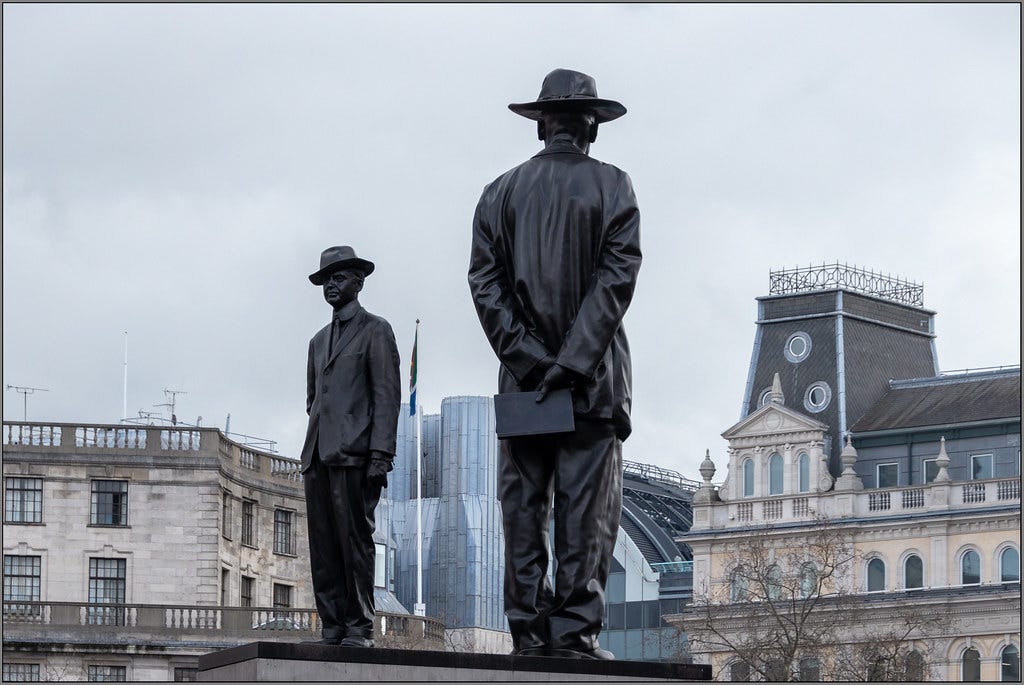
Although Chilembwe’s statue resembled the traditional bronze works surrounding it, Eshun said the work was “subtly subversive”, highlighting an “underrepresented figure in the history of the British Empire in Africa”.
