


Editor’s note: Please credit Steven Edginton’s Substack and link to this article when reporting these findings.
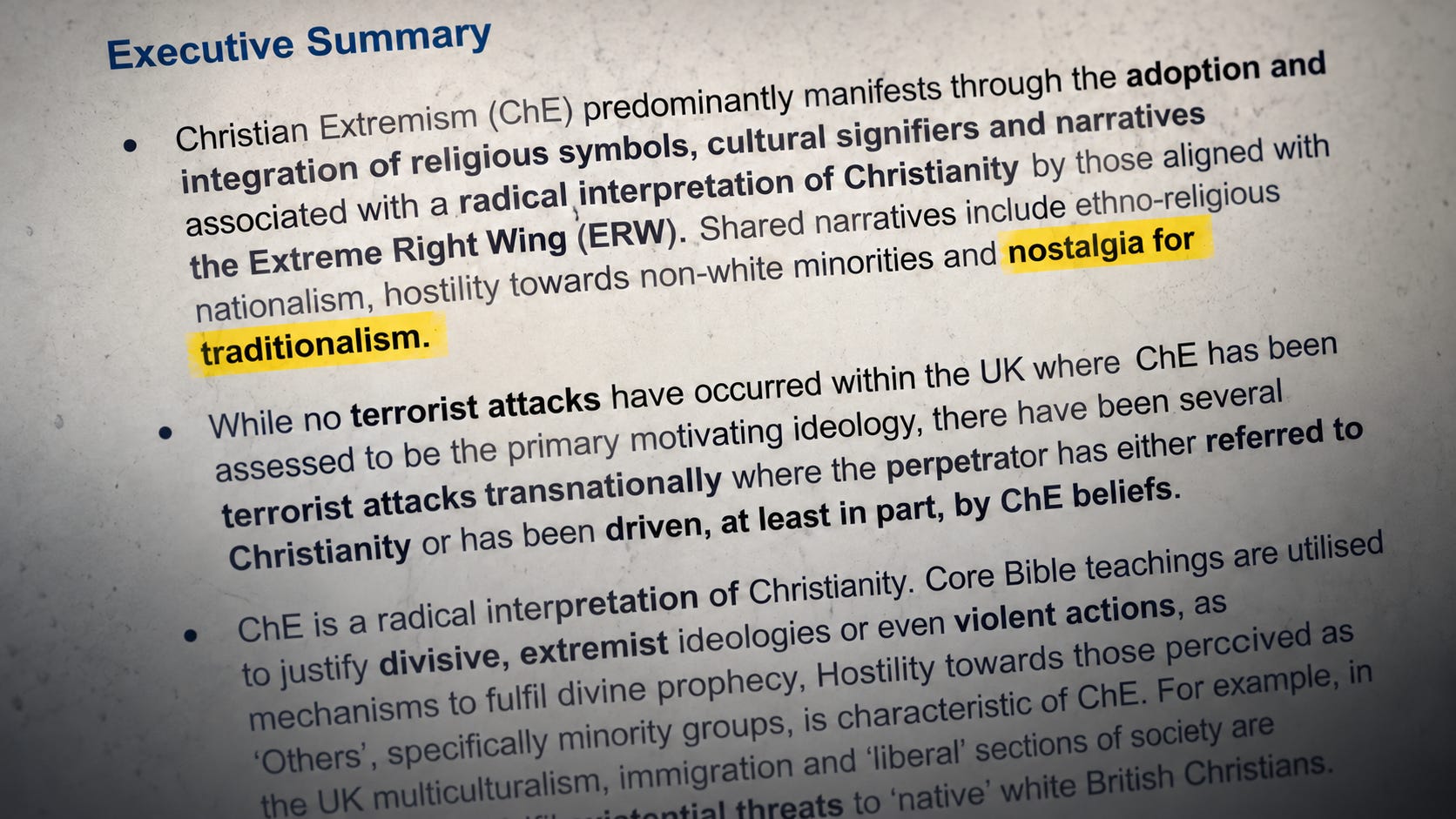
“Nostalgia for traditionalism” and the belief that multiculturalism, immigration and liberal values threaten Christianity have been identified as features of “Christian Extremism” in leaked counter-terrorism documents.
This Substack has obtained dozens of pages from a Home Office counter-extremism unit examining “Christian Extremism”, an ideology officials link to violence and potential terrorism.
The memo proposes government partnerships with churches and other religious institutions to promote “theological resilience” against the use of Christian teachings to justify hatred or violence.
The report, written by the Research, Information and Communications Unit (RICU), was produced to inform Prevent, the government’s counter-terrorism programme, and guide Whitehall’s understanding of what officials regard as Christian radicalisation risks.
It describes the ideology as a “radical interpretation of Christianity”, stating: “Central to this is the belief that Christianity and traditional values are under existential threat from multiculturalism and immigration and so must be defended.”
Alongside views that overlap with mainstream social conservatism, officials include white supremacy and antisemitism in their broad description of Christian extremism.
The document names Calvin Robinson among four “key influencers”, examines Tommy Robinson’s rallies and a Christmas carol concert, and identifies Milo Yiannopoulos as a key figure in the Groyper movement.
The report, circulated around Whitehall earlier this year, says “anti-Muslim prejudice is prevalent” within the ideology and that Islam is considered incompatible with “white Christian culture and values”, aligning with what officials call a “‘Clash of Civilisations’ perspective”.
“Socially ‘liberal’ sections of society are also interpreted as undermining ‘traditional’ values relating to sexuality and gender roles,” it adds.
Officials warn that a “siege mentality” can promote “anti-government sentiment”, with some Christian extremists blaming governments for “increased liberalisation and erosion of traditional norms”.
“Traditionalism is highly valued within ChE [Christian Extremist] ideology,” the report states.
The report also refers to the “Great Replacement”, which it characterises as a conspiracy theory.
RICU acknowledges that the threat of violence from Christian extremists remains “low” and that no terrorist attacks in the UK have been assessed as having Christian extremism as their primary motivating ideology.
Jeremiah Igunnubole, a former senior crown prosecutor and UK legal counsel for Alliance Defending Freedom, a Christian legal advocacy organisation, said: “Recognising and wanting to preserve Britain’s Christian cultural heritage and traditions is not extreme.
“Of course, advocating violence is completely wrong and unacceptable. But the report sets the threshold for extremism far below that, while recognising that the threat of violence from so-called ‘Christian extremism’ is ‘low’.
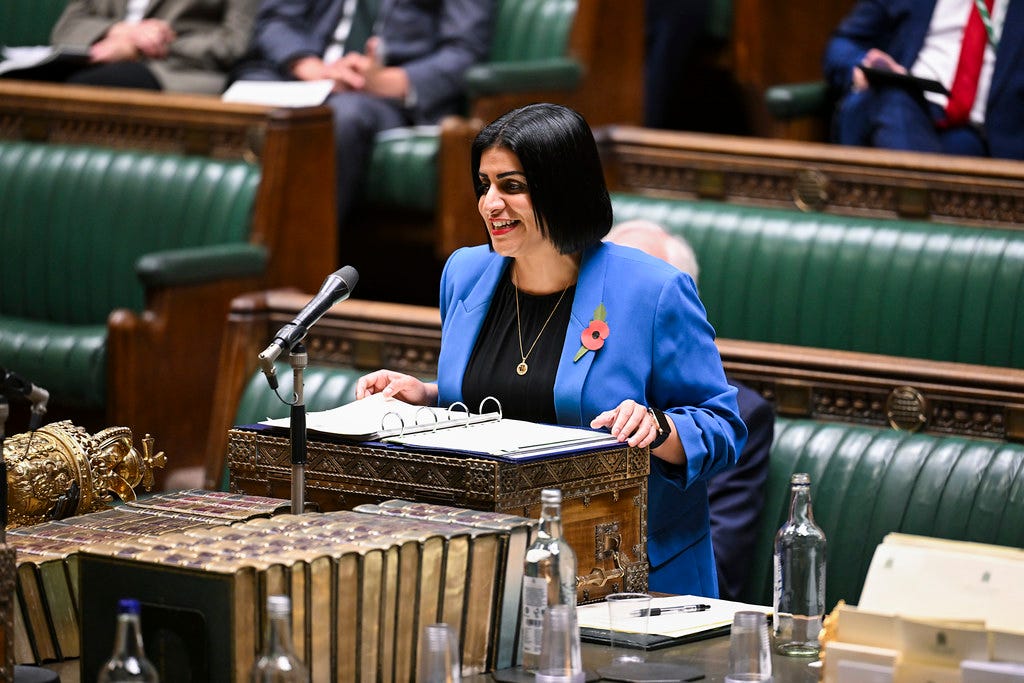
“This begs the question: why was this report written? It suggests an institutional anti-Christian bias has taken hold in the Home Office, and Secretary of State Shabana Mahmood now has serious questions to answer.”
The RICU report documents different strands of Christian extremism. One of its main focuses is Christian nationalism, which it describes as the “primary manifestation” of Christian extremism in Britain.
Officials associate this with the “preservation of Christian cultural heritage” and fears that demographic and cultural change threaten a traditional Christian way of life.
Yet the report also acknowledges: “Christian Nationalism is not intrinsically extremist and promoting the fusion of national and Christian identities alone is not extreme.”
It says the threshold for “Christian Nationalist Extremism” would be met where proponents advocate overthrowing liberal democracy, consider violence justified, or threaten or use violence.
The RICU memo draws on a broader definition of extremism introduced by the previous Conservative government in March 2024. This covers the advancement of ideologies based on violence, hatred or intolerance, with aims including to “undermine, overturn or replace the UK’s system of liberal parliamentary democracy and democratic rights”.
The definition was introduced to guide decisions about government funding and engagement with organisations. At its launch, Michael Gove told MPs that it would not affect people with “conservative religious beliefs”.
In the report, officials examined prominent Christian and nationalist figures, their online influence and the increasing use of Christian language and symbolism at political events.
A table records the social media followings of Calvin Robinson, Jim Dowson, Jayda Fransen and Nick Griffin, identifying them as four “key influencers” within Christian nationalist and extreme-right online networks.

