


Editor’s note: If reporting on or reproducing material from this investigation, please credit this Substack and link to the original article.
One year ago, Charlie Kirk was shot dead; the British government immediately got to work.
Following Kirk’s murder, the Research, Information and Communications Unit (RICU), a government counter-extremism and terrorism unit, began monitoring thousands of social media channels, gauging the reaction of what they describe as “Extreme Right Wing” (ERW) activists.
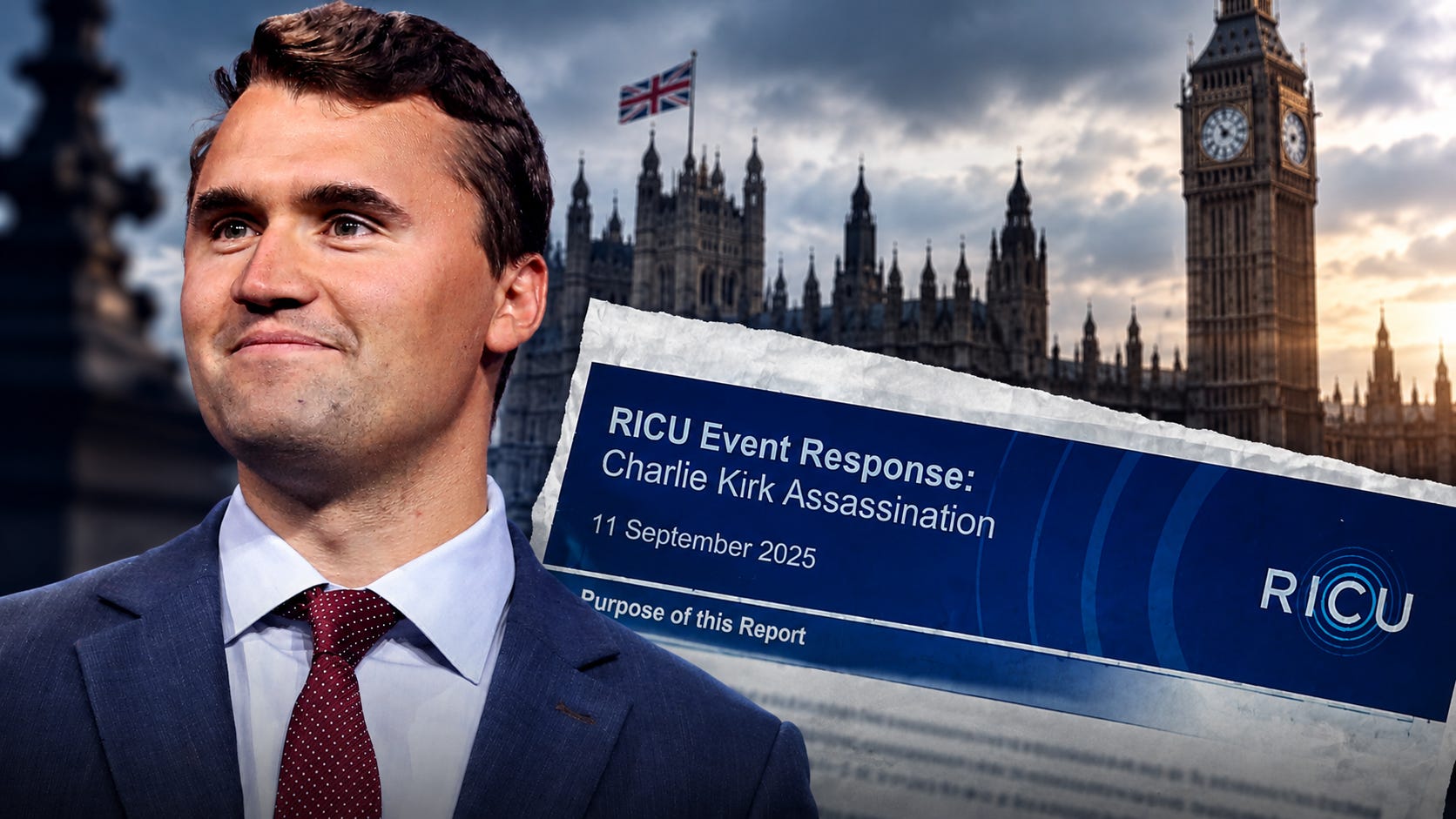
Published here for the first time, a memo generated by RICU reveals that officials assessed that “Extreme Right-Wing” activists, including Tommy Robinson, would use Kirk’s assassination to “push pro-free speech narratives”.
Counter-extremism agents assessed that Right-wing extremists would use Kirk’s death to “encourage more radical action” and “abandon political moderation in favour of more radical political stances”.
Meanwhile, RICU characterised the Left-wing online response to Kirk’s assassination as “moderate” and largely “factual reporting”, despite thousands of Left-wing activists celebrating the shooting.
RICU’s response to Kirk’s murder has drawn criticism from prominent free speech campaigners, including the Free Speech Union, the Alliance Defending Freedom, and the US State Department.
A memo entitled ‘RICU Event Response: Charlie Kirk Assassination’ was circulated across Whitehall, including to officials in the Home Office, Foreign Office and Cabinet Office, as well as police officers, on 11 September 2025, the day after Kirk was shot.
The memo was classified as “Official Sensitive”.
RICU assessed that American and British ERW audiences would present the murder as “a shared attack on the ERW movement and free speech activism more generally”, and monitored the response of Turning Point UK, the British arm of Charlie Kirk’s American organisation.
“There is nothing ‘extreme’ about ‘pushing pro free speech narratives,’” said Sarah Rogers, the United States Under Secretary of State for Public Diplomacy, who served as Kirk’s attorney on First Amendment issues and has led the Trump administration’s advocacy against censorship in Europe.
“That’s why censorship by governments proves so unpopular.”
Rogers added that in her judgment, the RICU report showed “blind spots” which “regrettably were not unique to the UK,” pointing out now-discredited intelligence products rescinded by the CIA “show the same biases.”
“Most glaringly, the memo describes the ‘leftist’ response as ‘moderate,’ despite describing the same leftists as ‘celebratory’ of Charlie’s murder,” said Rogers.
RICU is a government unit based in the Home Office that monitors and analyses terrorist and extremist content and supports government counter-terrorism communications.
Founded in 2007, RICU has stirred controversy over its role in coordinating ‘controlled spontaneity’ campaigns in the aftermath of terrorist attacks, including pre-planned messaging, vigils and demonstrations intended to shape the public’s response to terrorism.
For example, after an ISIS terrorist attack in 2014, RICU created an image of a Muslim woman wearing a hijab with a British flag, which was subsequently published on the front page of The Sun and other British newspapers.
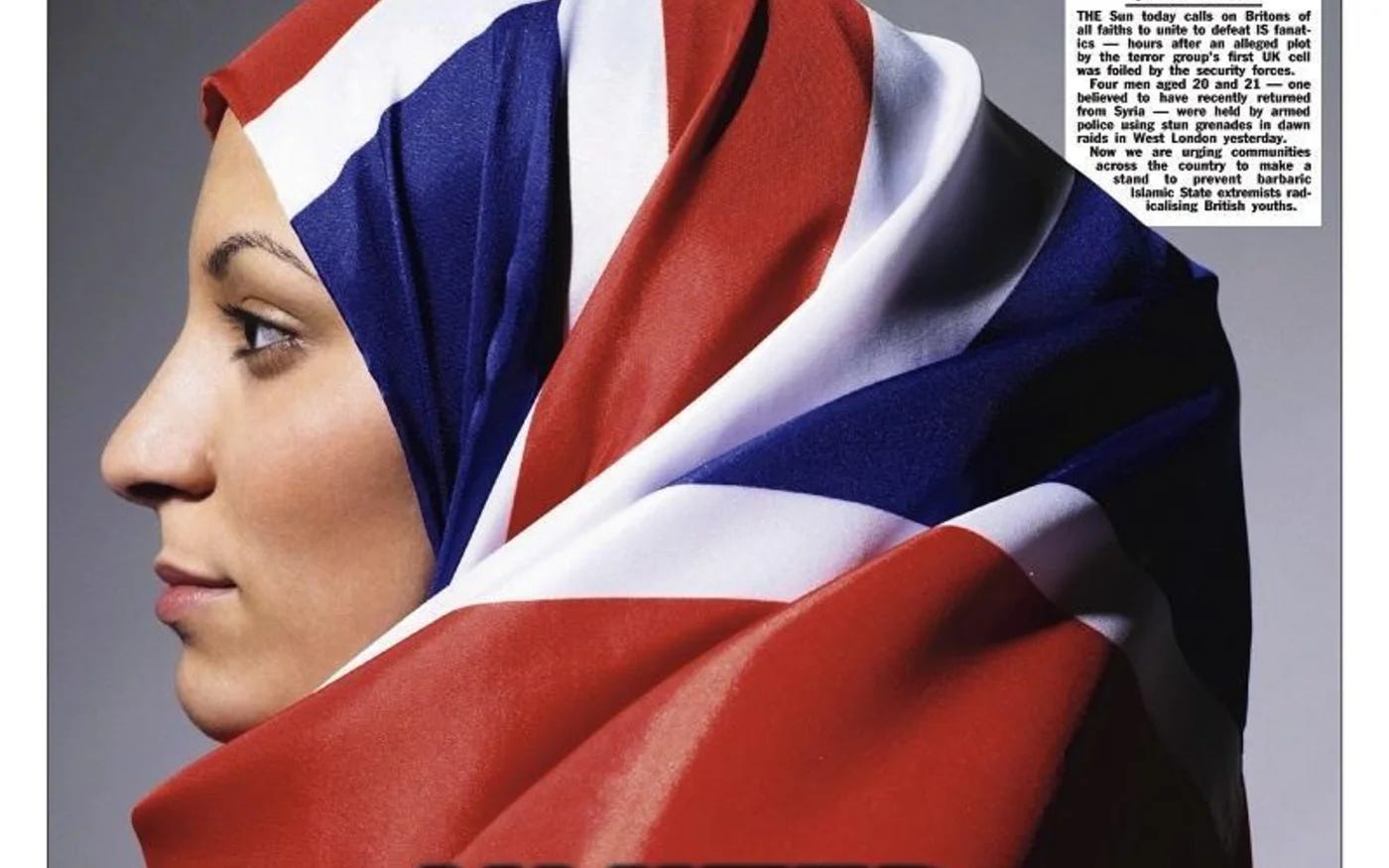
The image was created because, according to a leaked document from the company RICU commissioned to make the image, “the UK authorities wanted to challenge ultraconservative and misogynistic interpretations of Islam”.
Following major terrorist events, RICU analyses tens of thousands of social media channels to monitor the responses of those it classes as extremists.
Charlie Kirk’s assassination prompted a RICU response, investigating messages from “Extreme Right-Wing” (ERW), “Left-Wing and Single Issue” (LASI), and “UK Islamist Terrorist Supporters” (UK-ITS).
The memo reveals that RICU identified 2,000 posts from what it described as global “ERW audiences” discussing Kirk’s assassination, with most appearing within an hour of the attack.
Officials described the reaction as “highly emotionally charged”.
“The dominant narrative within the ERW attributes responsibility for the assassination to the ‘political left’ and claims that it is part of a broader campaign of violence against conservatives and White Christians,” the memo stated.
