


Police were warned against arresting violent BLM protesters who assaulted officers or caused criminal damage to avoid “triggering” them, a leaked document reveals.
An internal police risk assessment published during the Black Lives Matter protests of June 2020 warned officers of potential “trigger points” that might cause crowds to riot.
One trigger point was “police arresting individuals (such as for assault on police or criminal damage)”.
In the summer of 2020, dozens of police officers were assaulted by BLM activists across Britain, including some 62 in London alone.
According to a 2024 report by Lord Walney, the Government’s independent adviser on political violence and disruption, officers were “kicked to the ground” and pelted with bottles and other missiles.
However, during the riots, police were told to “be mindful of possible increased tensions when interacting with the BAME community”, and warned against arresting violent agitators.
The risk assessment came from the National Police Coordination Centre (NPoCC), a body that coordinates police responses across the UK during times of crisis. The organisation, created by Theresa May in 2013, plays a central role in planning and coordinating the policing of major protests, riots and other large-scale public order incidents.
Following the death of George Floyd, a black man who died while resisting arrest in Minneapolis, the NPoCC warned the BLM protests would impact “UK community tensions” and could lead to “large scale disorder”.
Lord Walney’s report on the BLM riots describes an incident during which officers were “chased down Whitehall as demonstrators hurled objects and attacked them with sticks and rocks”.
Protesters also threw fireworks at the police, while one mounted officer was thrown from her horse, suffering a cracked collarbone, broken ribs and a collapsed lung.
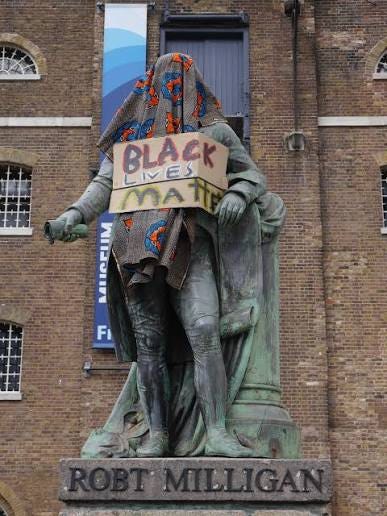
National monuments and statues were also vandalised and destroyed across the country, including protesters spraying “was a racist” on Winston Churchill’s statue in Parliament Square.
The NPoCC memo stated that for riots to occur “a significant trigger would need to emerge”, for example “death in police custody of a respected member of the BAME community or of a prominent gang member, or significant police altercation at protests”.
The document continued: “Reporting from the solidarity protests in London to date has identified trigger points for negative crowd reactions, which include… police arresting individuals (such as for assault on police or criminal damage).”
The NPoCC then recommended that “All forces [are] to consider potential trigger points at protests”.
The risk assessment has led to accusations of two-tiering policing, where ethnic minority groups are treated differently from white British people.
Suella Braverman, former Home Secretary and Reform Party MP, said the memo proved “two-tier policing is real in this country”.
She continued: “Can you imagine if pro-British protests were policed in such a weak manner? No. Because it is inconceivable that senior figures within the police would change how they operate for anyone other than BLM.”
“The policing of the BLM riots remains one of the darkest and worst moments in recent policing history.”
In 2024, officers firmly cracked down on protests and riots following the mass stabbing of young children by Axel Rudakubana, the child of Rwandan immigrants.
Harry Farrer, a 22-year-old with no previous convictions, was sentenced to two years and three months in prison for throwing a plant at the back of a police officer during the protests.
David Spring, a retired train driver who was caught at a protest shouting “Who the f**k is Allah?” was given an 18-month prison sentence.
Peter Lynch, a 61-year-old grandfather, was jailed for two years and eight months, despite the judge admitting: “You did not yourself attack any police officer, as far as can be detected, but what you did was encourage by your conduct others to behave violently and you were part of this mob.”
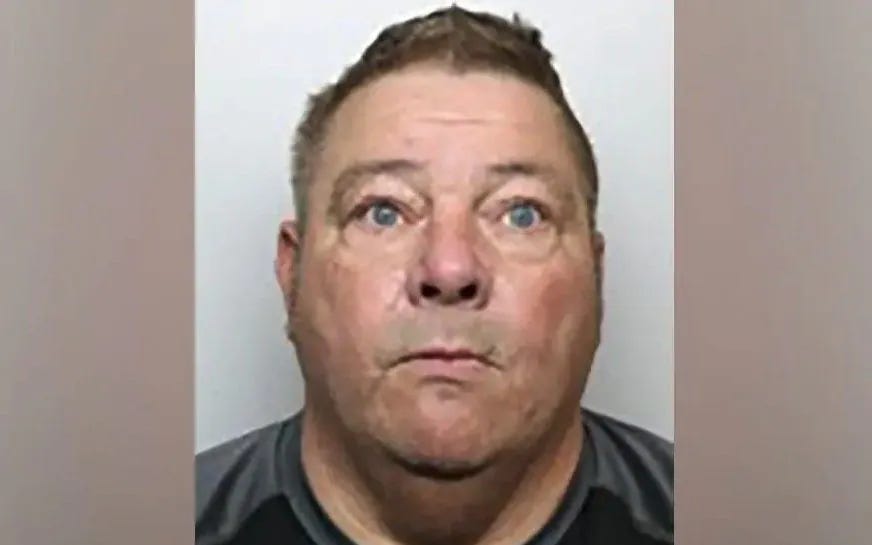
Lynch, who was filmed screaming at police “protect my children” and “we are on the streets now to protect our kids,” was found dead in his cell after committing suicide just two months into his sentence.
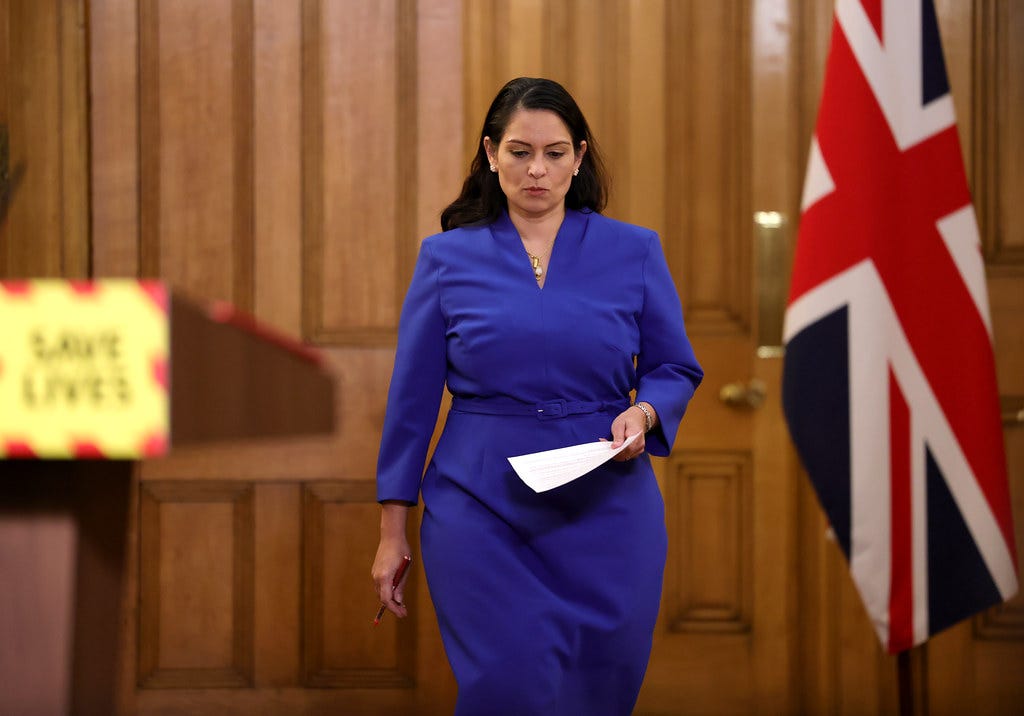
Priti Patel, who was Home Secretary during the BLM protests, has faced criticism for presiding over “two-tier” justice.
A senior Reform Party source told me: “The institutional failure within the Home Office is directly the result of the catalogue of failures instituted when Priti Patel was Home Secretary.”
“Her chaotic reign not only led to the floodgates being opened on mass immigration, but completely eroded trust in the police and mob rule.”
