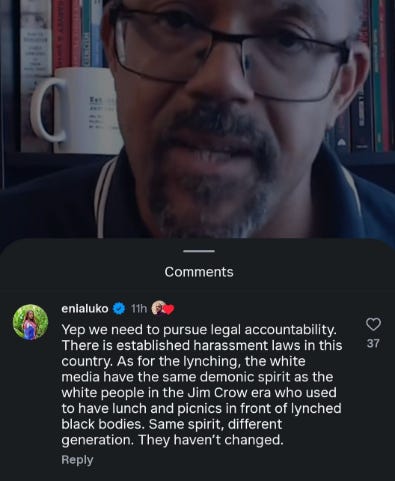


Eniola Aluko, the former England footballer and Adidas ambassador, has accused “the white media” of sharing the same “demonic spirit” as Jim Crow-era lynchers.
In an Instagram comment posted on Monday, the broadcaster described Jason Arday’s death as a “lynching”, and said: “the white media have the same demonic spirit as the white people in the Jim Crow era who used to have lunch and picnics in front of lynched black bodies.”
She continued: “Same spirit, different generation. They haven’t changed.”
Aluko also called for media companies to be held legally accountable for their reporting on Arday, adding that “there is [sic] established harassment laws in this country”.
Her comments were criticised by free speech campaigners.
Lord Young, Director of the Free Speech Union, said he found her remarks about journalists “grossly offensive”.
Baroness Fox, a prominent free speech campaigner and Director of the Academy of Ideas, said: “It’s so galling and morally repugnant that race is being weaponised to whip up a frenzied assault on media independence.”
Fox described Aluko’s post as “distastefully vicious bullying” and warned that it was “bloody dangerous, not least for free thinkers, democrats, or any members of the awkward squad - whether they are black or white.”
Aluko is a prominent ex-football star and broadcaster. She played women’s football for Chelsea and Juventus, and after retiring in 2020 became a regular pundit for ITV and other broadcasters.
In 2023, Aluko was appointed a Member of the Order of the British Empire (MBE) for her services to football and charity.
Her Instagram comment was in response to a video published by Kehinde Andrews, a Black studies academic, who described the scrutiny of Jason Arday as a “lynching”, accusing critics of joining a smear campaign and invoking “respectability politics”.
Following Arday’s death, Aluko has made a series of posts about the topic.
She wrote on Instagram that she is “committed to working with people to ensure legal accountability and stricter independent regulation of the media who are responsible for disproportionate racialised harassment.”