
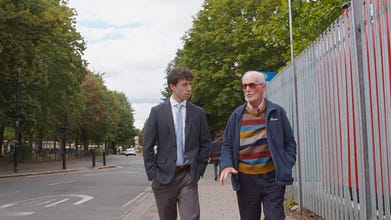

“It was worth fighting for. But what was allowed to happen afterwards? That wasn’t worth fighting for.”
“Nobody shut their door, because it was so safe.”
Don Poole was born on 29 April 1924. He lived through the Great Depression, the Blitz, the war against Japan, the end of the empire and the total demographic transformation of Britain. Now 102, he is not happy with how the country has changed. “If war was to break out tomorrow,” he told me, “it wouldn’t be worth fighting for this country.”
As we remember those who fought and died for Britain this week, it is worth examining how the greatest generation view today’s multicultural UK.
Last November Alec Penstone, a 100-year-old Royal Navy veteran, told Good Morning Britain that the sacrifice of his friends “wasn’t worth the result that it is now”, and was met with a patronising “Oh, I’m sorry” from Kate Garraway and a curt “What do you mean by that?” from Adil Ray. He died in May.
Twenty years earlier, the writer Nicholas Pringle placed notices in regional newspapers asking Second World War veterans how they viewed the country they had fought for, and published hundreds of their replies as The Unknown Warriors. A nurse from the Manchester Royal Infirmary wrote: “We feel that we are foreigners in our towns and cities. It is no longer a ‘country fit for heroes’.” Geoffrey Prater, who lost his brother to a parachute mine and his home to a V1 rocket, ended his letter: “Was it all worth it? No.”
Pringle’s book led me to spend this autumn making a documentary interviewing the generation who remember Britain before mass immigration. It was that project which brought me to Don Poole.
He first saw war coming as a schoolboy. In the 1930s his school took a trip to Nazi Germany, and the boys found themselves playing football against the Hitler Youth. He remembers them as “great big blokes”, in their early teens but built like men. He came away with one firm impression of Nazi Germany: “that it was going to be a war very, very soon.”
